






At Which Stages Can Lung Cancer Be Treated Without Surgery?
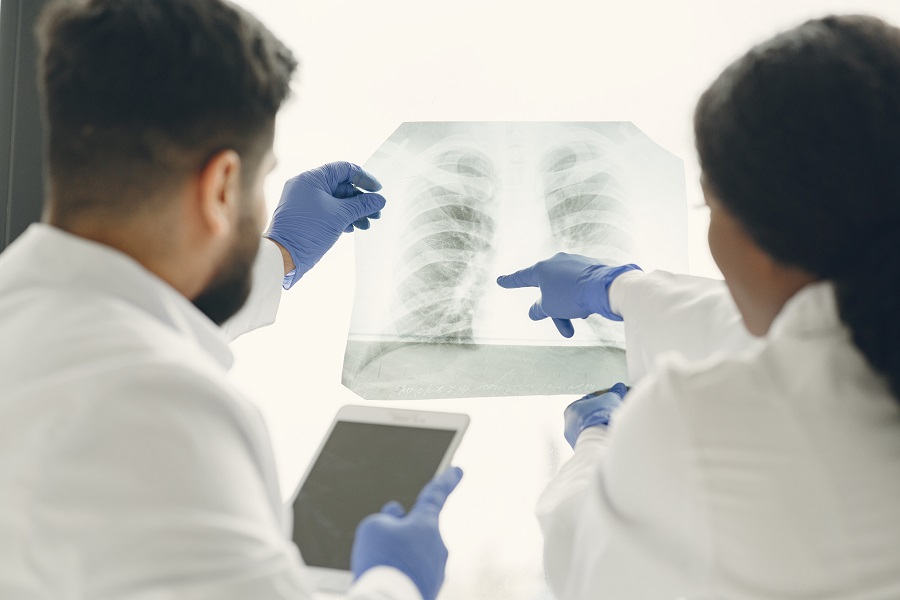
Lung cancer treatment without surgery works well across many stages, particularly when health issues or tumour spots make operations risky. Options such as radiotherapy, chemotherapy, and immunotherapy effectively control growth from early, confined cases to widespread ones.
In this article, we cover suitable stages and approaches used in the UK. Non-surgical paths match surgery's success in stage I disease, with five-year survival over 70% for fit patients.
Understanding Lung Cancer Stages
Lung cancer is divided into non-small cell lung cancer (NSCLC), which accounts for about 85% of cases, and small cell lung cancer (SCLC). Both are staged using the TNM system, in which T describes tumour size, N indicates lymph node involvement, and M indicates whether the cancer has spread to distant organs.
- Stage 0: Cancer is confined to the airway lining
- Stage I: Tumour is limited to one lung and under 4 cm
- Stage II: Cancer has spread to nearby tissue or a small number of lymph nodes
- Stage III: Larger local spread within the chest
- Stage IV: Cancer has spread to distant organs such as the liver or bones
This staging guides treatment decisions, helping doctors determine when surgery is effective and when radiation or drug therapies are the better option, with early-stage cancers responding best to focused treatments.
Doctors assess fitness using performance status scores from 0-4, along with scans like PET-CT that highlight active areas for precise mapping. UK NHS multidisciplinary teams (MDTs) review cases weekly and opt for non-surgical routes in 40-50% of patients with heart or lung conditions. Comorbidities like COPD raise surgery risks to 15%, tipping choices toward outpatient radiation.
Consultation with a thoracic surgeon remains essential, as surgical input helps confirm operability, clarify risks, and ensure no curative option is missed. This specialist perspective strengthens MDT decisions and gives patients confidence that all pathways have been fully explored. Staging accuracy unlocks control rates above 80% without cutting.
Stage 0 and Stage I: Early Contained Disease
Stage 0, or carcinoma in situ, can be cleared with photodynamic therapy, which activates light-sensitive drugs to destroy surface cells, curing 90% without deeper invasion. Stage I NSCLC under 4 cm without nodes uses stereotactic ablative radiotherapy (SABR), firing high doses in three to five sessions to match lobectomy outcomes. UK centres report 90-95% local control at three years for frail patients. This avoids chest tubes and 10% pneumonia rates from surgery.
SABR works best for outer lung nodules, while CyberKnife tracks central ones that shift with breathing. Proton therapy protects heart tissue in cases involving the upper lobe. Five-year survival rates hit 70-80% for under-75s in good health.
Stage II: Tumours Reaching Nearby Areas (No Distant Spread)
Chemoradiotherapy treats stage II lung cancer, where tumours have grown into nearby tissue or a few lymph nodes but stay within one side of the chest. Chemotherapy shrinks the tumour first, then radiation targets the remaining cells with precise beams. This combination achieves five-year survival in 40% of cases, while avoiding surgery's risks, like 10% air leaks in the lung. The sequence keeps more healthy lung tissue intact compared to cutting it out.
Immunotherapy such as durvalumab follows radiation in node-involved cases, extending the time before cancer worsens by 50%. Robotic systems like SABR handle tumours near major airways with safety. Complications drop to 5%, far below infection rates from open chest surgery. Patients who smoke often breathe more easily long-term with these less invasive steps.
Stage III: Locally Advanced Lung Cancer
Stage III lung cancer has spread within the chest but not to distant organs. For many patients with Stage IIIA or IIIB, surgery is not the first choice because chemoradiotherapy is either equivalent or preferred in outcomes, especially when surgery risks are high and the disease is unresectable. Chemotherapy combined with radiotherapy is widely recommended when surgery isn’t suitable, particularly for unresectable disease, and this approach has become more common in practice. NICE guidance supports chemoradiotherapy in people with Stage III NSCLC when surgery isn’t appropriate or is declined.
In patients whose cancer has not progressed after chemoradiotherapy, adding durvalumab (an immunotherapy targeting PD-L1) as consolidation treatment significantly improves progression-free and overall survival compared with standard care. Official NHS Technology Appraisal data show longer survival with durvalumab following concurrent chemoradiation in unresectable Stage III disease. Specialist centres also use advanced radiotherapy techniques, such as IMRT, to reduce exposure to nearby organs, thereby improving tolerance and reducing toxicity.
Stage IV: Metastatic Lung Cancer
Stage IV means the cancer has spread beyond the chest. In cases where there are only a few distant lesions (often referred to as oligometastatic disease), targeted radiotherapy such as stereotactic ablative radiotherapy (SABR) can be used alongside systemic therapy in selected patients, supported by clinical evidence suggesting improved local control and disease delay.
For more widespread metastatic disease, treatment focuses on systemic therapies. Immunotherapy, often combined with chemotherapy in first-line treatment, is standard for many patients without actionable mutations. Targeted therapies matched to specific mutations (EGFR, ALK, etc.) are also used when appropriate. Local treatments for symptom control (e.g., stents for airflow obstruction) improve quality of life even when a cure isn’t possible.
Small Cell Lung Cancer (All Stages)
Small cell lung cancer (SCLC) is fast-growing and usually treated without primary surgery. In limited-stage SCLC, concurrent chemotherapy and thoracic radiotherapy are recommended for people fit enough to tolerate combined treatment, as per NICE guidance. Prophylactic cranial irradiation (PCI) is still recommended for patients whose disease responds to first-line treatment to reduce the risk of brain relapse.
For extensive-stage SCLC, platinum-based chemotherapy remains the backbone of treatment, often used with immunotherapy agents in combination regimens. Subsequent thoracic radiotherapy or PCI may be considered in selected cases, particularly if the disease has responded to initial treatment.
Surgery or Non-Surgery?
Underlying heart or lung conditions, tumour proximity to major structures, and overall fitness significantly influence the decision against surgery. Chemoradiotherapy and advanced radiotherapy techniques offer tumour control with lower surgical risk, especially for patients with reduced performance status. Molecular profiling and genetic results increasingly steer patients toward precision systemic therapies instead of invasive procedures.
Surgery remains the preferred option for early-stage NSCLC (Stage I–IIA) in patients who are medically fit, offering favorably high cure rates. In carefully selected Stage III cases, usually after tumour shrinkage from chemoradiation, limited surgical resection may be considered. Salvage surgery may be considered in some cases of local recurrence after other treatments.
Conclusion
Non-surgical options treat lung cancer effectively at every stage, from SABR cures in early disease to immunotherapy control in late spread, all via UK NHS MDT precision. These methods preserve lung function, which is important when surgical scarring can reduce breathing capacity by 20–30%, and allow many patients to stay active during treatment.
Open conversations with your care team about fitness, scan results, symptoms, and daily priorities are essential, as tailored treatment plans consistently deliver the best outcomes. When care is personalised and closely monitored, non-surgical options can turn lung cancer into a condition that is not only treatable, but often manageable, allowing patients to focus on living well, not just surviving.